


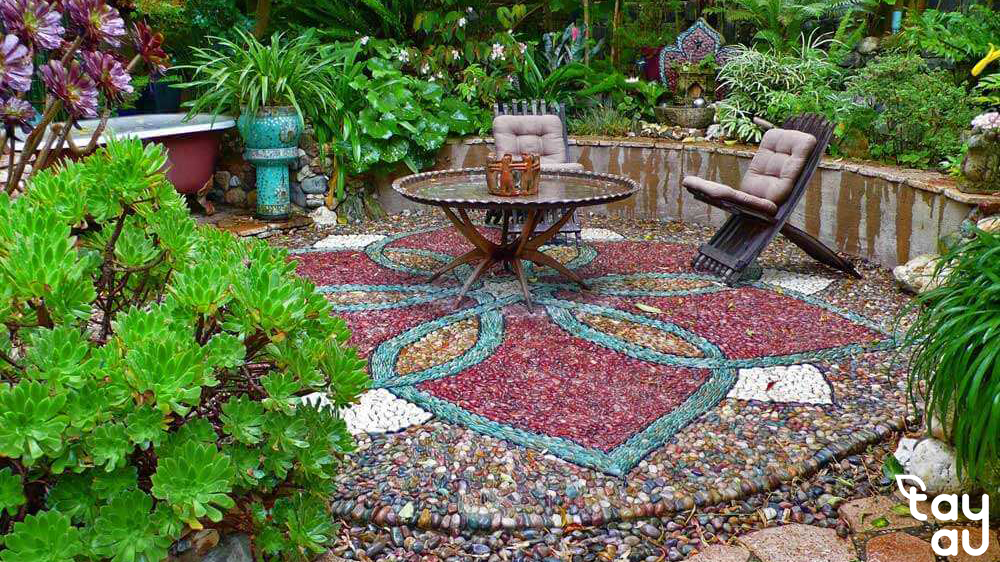
The art of Mosaic Gardens is becoming increasingly popular and widely applied in our daily lives, not only in large architectural projects but also in garden landscapes. Let’s explore how to create the most beautiful and impressive Mosaic-style garden with Tây Âu.
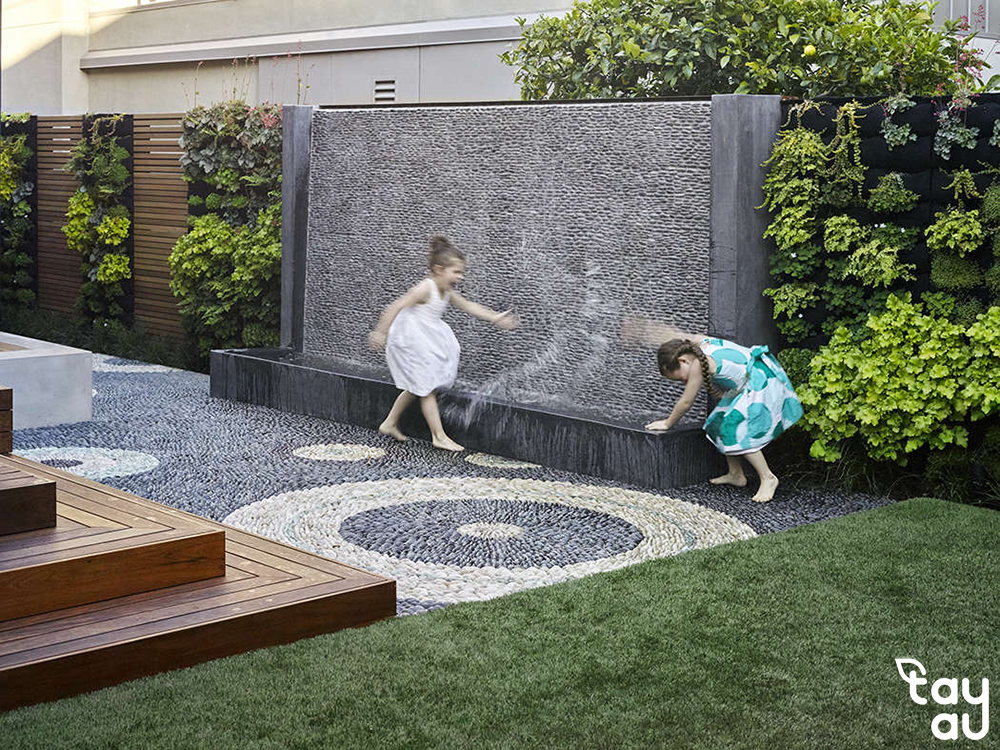
What is a Mosaic Garden?
Mosaic (also known as “mosaic work” or “inlay”) is a form of decorative art that creates an image by assembling small pieces. In other words, Mosaic uses small material pieces combined to form a cohesive whole. These small pieces, called “mosaic materials,” are usually solid, flat, and primarily square-shaped, such as colored glass, stone, tiles, mirrors, and glass. The physical quality of the materials and the assembly technique are what contribute to the special value and artistic quality of Mosaic art.
History of Mosaic Art
Mosaic art has a history of over 4000 years. As early as the 3rd millennium BC, Mosaic appeared in Mesopotamia as a type of decoration using colored stones and ivory pieces. Around 1500 BC, ceramic mosaics were introduced but only truly developed during the Persian Empire (8th century BC). Like other mosaic materials, ceramic tiles were mainly used for decoration in palaces and temples.
Mosaic art continued to influence ancient Greek and Roman civilizations. Mosaic quickly became a popular technique in decorative art and was a preferred choice for medieval interior decoration. From this point, Mosaic art developed in both technique and color, with many generations of artisans contributing, becoming a distinct art form defined by its very name.
Today, Mosaic is widely used in both interior and exterior decorative arts, as well as for creating grand public artworks, with a growing presence in modern architecture and Mosaic art.
Benefits of Designing a Mosaic Garden
Designing a garden in Mosaic style offers the following benefits:
High Aesthetic Value: Mosaic is created from pieces of various colors and materials, resulting in high aesthetic value.
Expresses Unique Design Thinking: You can creatively design any garden mosaic you like using all available materials.
Cost-Effective: You can make use of leftover ceramic tiles, glass pieces, or gravel from house construction to design your garden. The cost of materials is not crucial; what matters is how you arrange them to create an impressive Mosaic garden.
Slip Resistance and Easy Maintenance: The arrangement creates grooves that provide friction and reduce slipping. Additionally, the natural roughness of the tiles helps keep them looking new and clean. This makes maintaining your garden simpler and easier.
High Durability: The materials used in mosaics are often highly durable, withstanding harsh weather conditions and ensuring a long-lasting outdoor art piece.
Easy to Maintain: Mosaic is easy to clean and maintain; regular surface cleaning helps retain its original beauty.
Applicable to Many Garden Elements: Mosaic art can be used to decorate various garden elements: tables, chairs, stairs, pathways, walls, garden floors, etc.
Creates a Relaxing Space: The harmonious combination of colors and patterns in mosaics creates a relaxing space that helps reduce stress and provides a sense of peace.
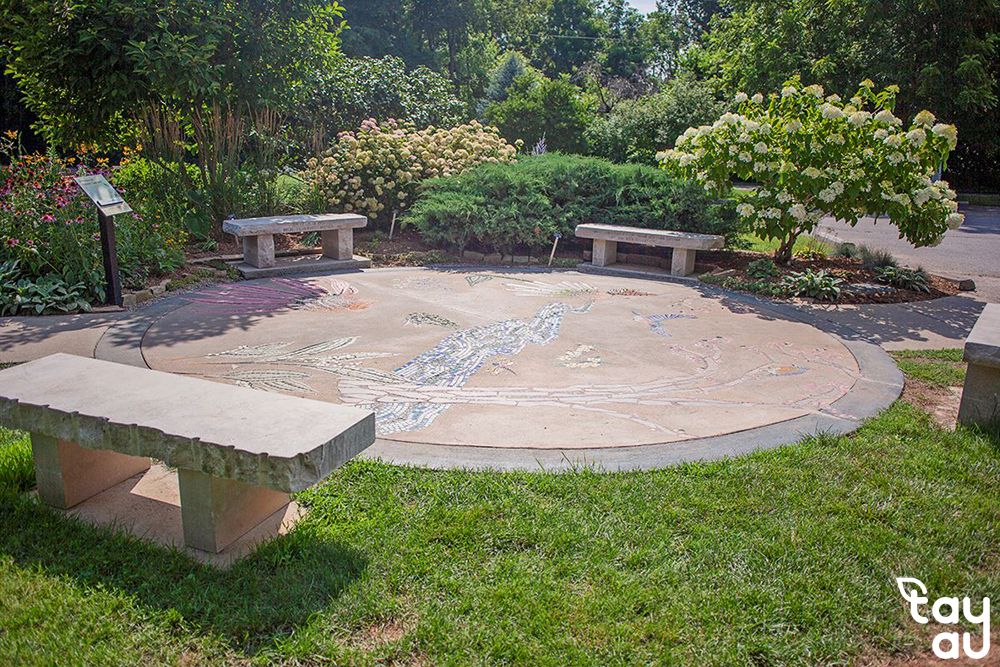
Applications of Mosaic Art in Garden Design
Gardens are places for recreation, and many families use them for relaxation, outdoor parties, etc., so they are highly emphasized in decoration. Mosaic design is chosen for garden spaces. Let’s review some applications of Mosaic art in garden design!
Garden Pathways
Familiar and simple colors of stones, pebbles, or ceramic pieces can beautify the small pathways in your garden.
Garden Floors
The Mosaic style can make your front porch or tea garden look like a rug designed according to your creative ideas or inspired by your favorite designs.

Stair Design
Mosaic staircases are also a popular outdoor decoration art that creates beautiful and artistic pathways.
Garden Interior Design
With simple ideas and careful color choices, you can create a space that is uniquely yours. Stone tables and chairs for tea or relaxation in the garden become more distinctive and vibrant.
Flower pots and garden furniture can also become artistic pieces with Mosaic. You can use mosaic pieces to decorate pot surfaces or table tops, creating unique and personalized garden items.
Garden Walls
Walls or garden gates can be decorated with Mosaic works to create focal points and enhance aesthetic value. You can use ceramic pieces, colored glass, or tiles to create vivid murals that tell a story through each piece.
If possible, create a mural by assembling small pieces from various materials in Mosaic style. Pieces with pre-designed patterns and multiple colors will make the Mosaic mural on the wall a captivating focal point.
Fountains and Fish Ponds
Mosaic art can also be applied to fountains or fish ponds, creating a sparkling effect when light shines on them. Mosaic pieces reflecting light will make these areas more attractive and enchanting.
Fence Decoration
You can use blocks of different colors to create designs on fences, such as red flowers, sunflowers, or random patterns, leaving a memorable impression on visitors.
Decorative Items
Don’t forget to apply Mosaic art ideas to garden decorations like flower pots, small houses, animals, etc. Even if the surface area is not large, these items will make your garden unique and stand out more.
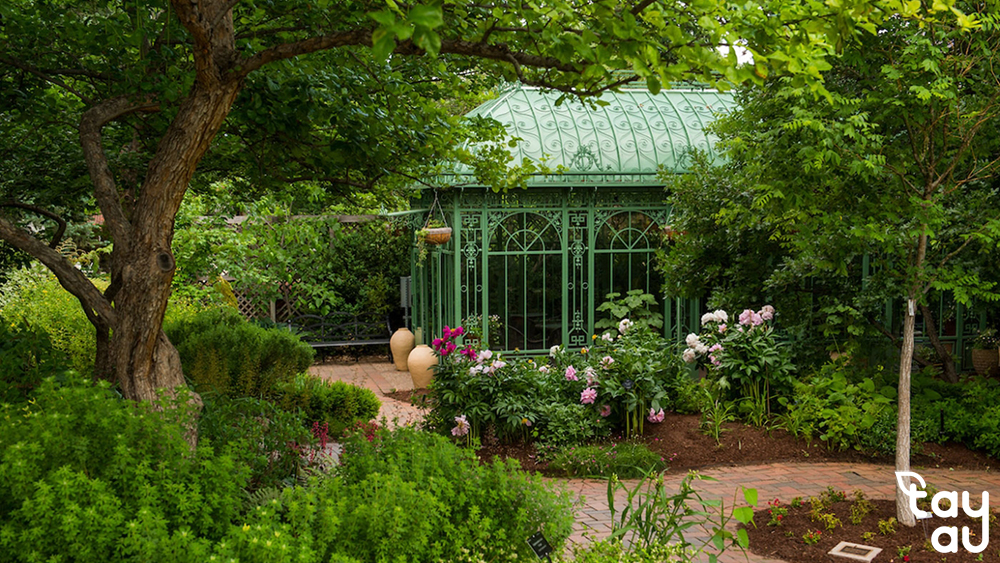
Mosaic art not only brings unique and creative beauty to the garden but also enhances the aesthetic value and style of your home. With its flexibility and variety in design, Mosaic can transform any space into a vibrant and colorful one. Let Tây Âu Landscape help you realize unique garden design ideas with Mosaic art.








