



An outdoor fish pond is a beautiful highlight for gardens, providing a fresh and relaxing ecological space. However, maintaining clear and clean water in the fish pond is a significant challenge for many people. If not properly cared for, the pond water can easily become cloudy, polluted, and affect the health of the fish. In this article, we will explore effective and sustainable methods to maintain water clarity in outdoor fish ponds.

Why is the water in outdoor fish ponds often cloudy?
Before diving into the details of methods to maintain water clarity in fish ponds, you need to understand the reasons why pond water becomes cloudy. Some common causes include:
Excessive algae growth: Algae is the main cause of cloudy water in fish ponds. Algae thrive when there is enough sunlight and excess nutrients from fish waste, leftover food, or fallen leaves.
Silt and dirt accumulation: Sediments, silt, and fish waste can accumulate at the bottom of the pond, causing water to become cloudy and unsanitary.
Ineffective filtration system: A filtration system that does not operate effectively or is not regularly maintained can lead to unfiltered water, resulting in cloudy water.
Excess fish and leftover food: If you keep too many fish in the pond or overfeed them, the excess food and fish waste will quickly pollute the water, creating conditions for bacteria and algae to thrive.
Benefits of maintaining water clarity in fish ponds
Maintaining clear water in outdoor fish ponds has the following benefits:
- Creating a good living environment for fish: Clear and clean water helps create an ideal habitat for fish, reducing the risk of disease and ensuring healthy growth.
- Enhancing the aesthetics of the garden space: A fish pond with crystal-clear water will be an attractive highlight for your garden, creating a relaxing atmosphere close to nature.
- Reducing maintenance costs: When the pond water is kept clean, you won’t need to spend too much effort and money on maintenance, while also avoiding issues like fish diseases or excessive algae growth.
Methods to Maintain Water Clarity in Outdoor Fish Ponds
Installing an Effective Filtration System
One of the key factors to keep the water in a fish pond clean is an effective filtration system. This system helps remove debris, fish waste, and other impurities from the pond, maintaining water cleanliness.
- Mechanical Filtration: A mechanical filtration system helps remove large solids such as fish waste, leaves, and debris. You can use sponge filter pads or cotton filters to catch these wastes before they accumulate in the pond.
- Biological Filtration: Biological filtration relies on beneficial microorganisms to decompose organic matter in the water, reducing nutrient levels and thereby limiting the growth of algae and harmful organisms. Biological filters utilize these microorganisms to help maintain the natural ecosystem in the pond.
- UV Filtration: UV filtration uses ultraviolet (UV) light to kill pathogenic microorganisms and reduce algae levels in the water. A UV filtration system is an effective way to prevent the pond water from turning green or cloudy due to algae.
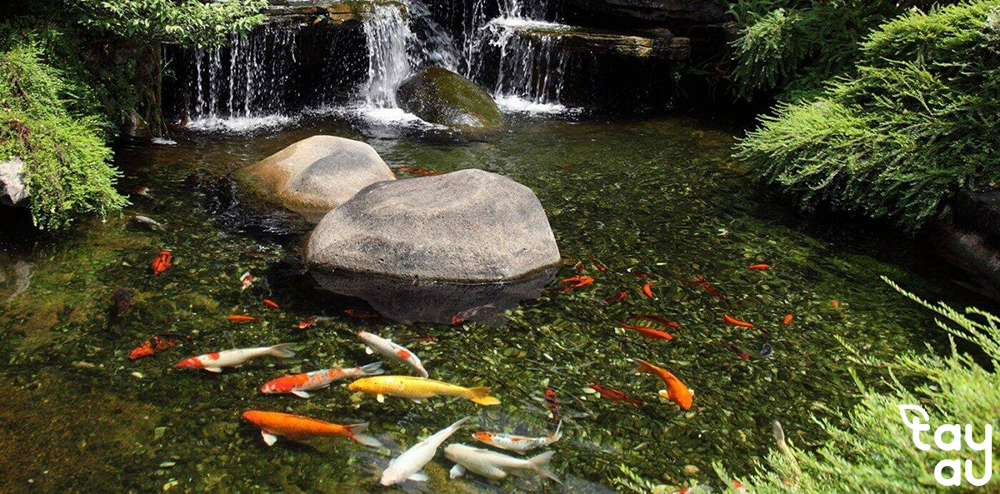
Adding Beneficial Microorganisms
Beneficial microorganisms play an essential role in cleaning the water in fish ponds by decomposing organic matter and keeping the water clear. You can add probiotic products containing beneficial bacteria to the fish pond to improve water quality.
These microorganisms help decompose leftover food, fish waste, and other debris, preventing the buildup of organic matter and reducing algae growth. Using probiotics is a natural, safe method that does not harm the pond’s ecosystem.
Controlling Light and Planting More Aquatic Plants
Light is a necessary factor for algae growth. To limit excessive algae growth, you should control the amount of light that reaches the pond. If the outdoor fish pond is exposed to too much direct sunlight, algae will thrive and cloud the water.
Ways to Control Light:
- Providing Shade: Use awnings, trees, or cover materials to reduce the amount of direct sunlight hitting the fish pond.
- Planting Aquatic Plants: Aquatic plants such as duckweed, water hyacinth, or lotus can absorb nutrients in the water, helping to compete with algae and preventing algae growth. Additionally, aquatic plants create a natural habitat and provide oxygen for the fish.
Regular Water Changes
Regular water changes are essential to keep the water in outdoor fish ponds clean and stable. Changing the water helps remove pollutants, balance the ecosystem, and prevent the water from becoming cloudy.
- Partial Water Changes: Changing about 20-30% of the water in the pond each week is an effective way to maintain clarity without significantly impacting the ecosystem.
- Using Treated Water: When changing the water, you should use treated water to remove chlorine and harmful chemicals for the fish.
Controlling Fish Population and Feeding Amount
Keeping too many fish in the pond will increase waste and pollute the water. You need to control the fish population according to the pond’s capacity to avoid overloading the filtration system and causing cloudy water.
Additionally, you should feed the fish moderately to prevent excess food. Uneaten food will decompose in the water, creating conditions for algae and bacteria to thrive. Ideally, feed the fish just enough for them to consume in 2-3 minutes and remove any leftover food immediately after.
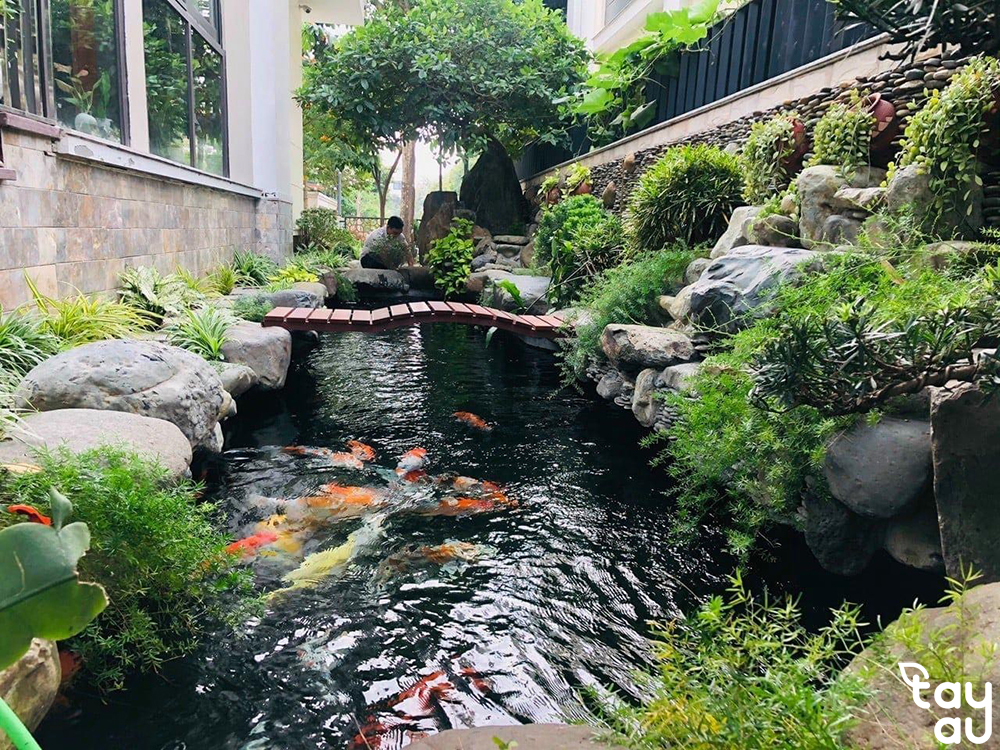
Using Natural Filtration Materials
You can use natural filtration materials such as activated carbon, pumice stone, or sand to improve water quality. Activated carbon can absorb organic compounds, chemicals, and odors in the water, helping to clean the water naturally.
Pumice stone and sand are two popular materials in fish pond filtration systems. They not only help remove impurities from the water but also provide a good environment for beneficial microorganisms to thrive.
Using an Oxygen Pump
An oxygen aerator not only provides oxygen for the fish but also helps prevent algae growth. When the water is well-oxygenated, beneficial microorganisms work more effectively, helping to maintain clean water and balance the pond’s ecosystem.
Regular Cleaning of Fish Ponds
Periodically, you should clean the fish pond, including removing sludge, debris, and cleaning the filtration equipment. This helps prevent the accumulation of waste and keeps the pond clean.
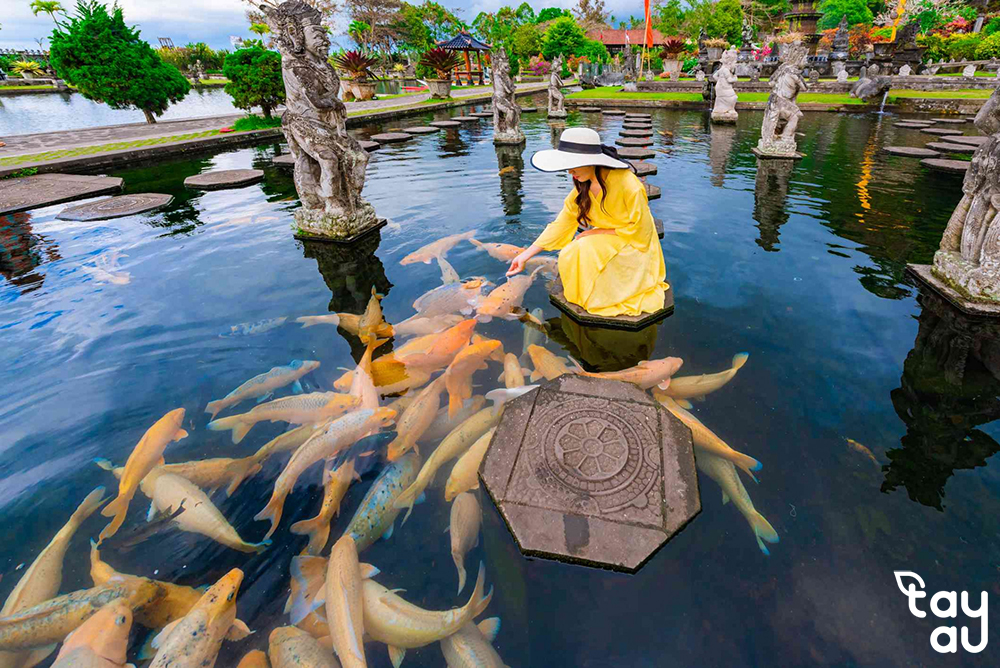
Important Notes for Maintaining Outdoor Fish Pond Water Quality
To effectively implement the methods for maintaining clean water in outdoor fish ponds mentioned above, you should keep the following points in mind:
- Regularly check water quality: Measure parameters such as pH, hardness, and ammonia concentration in the water to ensure it remains clear and clean.
- Limit the use of chemicals: Using chemicals to clarify water can be harmful to fish and the pond ecosystem. Natural and environmentally friendly methods should be prioritized.
- Balance the ecosystem: An outdoor fish pond is a small ecosystem that needs to balance the amount of fish, food, aquatic plants, and beneficial microorganisms. Maintaining a balanced ecosystem will help keep the water in the pond clear and clean.
The above methods for maintaining clean water in outdoor fish ponds not only help create a good living environment for fish but also enhance the aesthetic value of the garden. With simple measures like installing a filtration system, adding beneficial microorganisms, controlling light, and performing regular water changes, you can maintain clean and safe pond water. Wishing you success in caring for your outdoor fish pond!





