


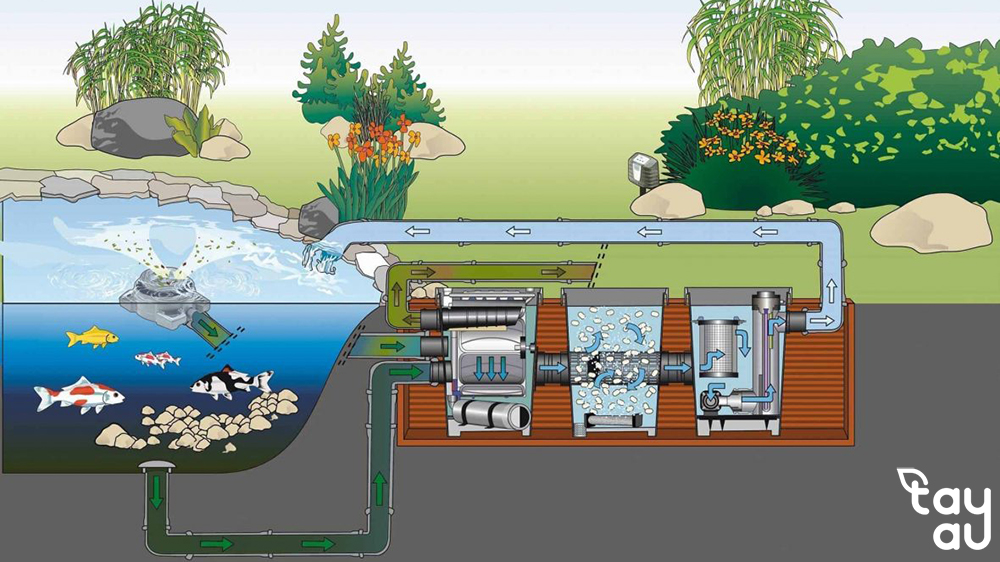
Koi Pond Filtration System is not only an aesthetic highlight in living spaces but also a miniature ecosystem that requires meticulous care. To ensure that Koi fish thrive and have a clean living environment, building an effective Koi pond filtration system is crucial.

Why a Koi Pond Filtration System is Necessary
A Koi pond filtration system is essential for maintaining water clarity and the health of Koi fish. Koi are large fish and produce a lot of waste. Without an effective filtration system, waste and uneaten food will accumulate in the pond, leading to the growth of harmful bacteria and toxic substances such as ammonia and nitrite, which can endanger the Koi.
Benefits of a Koi Pond Filtration System
- Maintains Water Quality: The filtration system helps remove waste and impurities, keeping the water clean and clear.
- Prevents Disease: By removing bacteria and harmful substances, the filtration system helps reduce the risk of disease for Koi fish.
- Creates an Ideal Living Environment: Clean water not only supports healthy Koi growth but also enhances their natural colors, adding vibrant beauty to the pond.
Structure of a Koi Pond Filtration System
A Koi pond filtration system is typically divided into three main types: mechanical filtration, biological filtration, and chemical filtration. Each type has a specific function, but they work together to ensure the water in the pond remains in optimal condition.
Mechanical Filtration
Mechanical filtration is the first step in the filtration system, responsible for removing large solid particles such as fish waste, leaves, and other debris from the water. This not only helps keep the pond water cleaner but also prevents clogging in other filter components.
- Filter Pads: Made from synthetic fibers, filter pads trap large particles before the water moves on to other filtration stages.
- Skimmer: This device sits on the pond’s surface, removing leaves, dirt, and other floating objects before they sink to the bottom.
- Drum Filter: Uses a rotating drum to filter out and remove solid particles from the water.
Biological Filtration
Biological filtration is the next stage in the Koi pond filtration system, where beneficial bacteria break down organic matter and toxins in the water. These bacteria live on the surfaces of biological filter media such as stones, ceramics, or plastics, and they convert ammonia and nitrite into less harmful nitrate.
- Bio Balls: Plastic balls with a large surface area that support bacterial growth and help break down organic matter in the water.
- Bio-Media: Filter media usually made from ceramics or plastic, with a large surface area for bacteria to grow.
Chemical Filtration
Chemical filtration is the final step in the Koi pond filtration system, using absorbent materials like activated carbon or zeolite to remove harmful chemicals, odors, and other dissolved substances from the water.
- Activated Carbon: Removes dissolved organic compounds and improves the taste of the water.
- Zeolite: Absorbs ammonia, helping to maintain ammonia levels at a safe level for the fish.
UV Sterilization
UV sterilization is not a part of physical filtration but is an important part of the water treatment system. UV light kills bacteria, viruses, and algae in the water, helping to prevent diseases and keep the water clear.
How to Choose, Install, and Maintain a Koi Pond Filtration System
Choosing the right outdoor Koi pond filtration system depends on various factors, including pond size, fish quantity, and surrounding environment. Below are some points to consider when selecting a filtration system for your Koi pond.
How to Choose a Koi Pond Filtration System
Pond Size: Pond size is the most important factor when choosing a filtration system. The larger the pond, the more powerful and efficient the filtration system needs to be. A general rule of thumb is that the filtration system should be capable of processing the entire pond volume at least once per hour.
For example:
- Small ponds (under 5,000 liters): A basic filtration system with a filter mat and bio balls can be used.
- Medium ponds (5,000 – 20,000 liters): A combined mechanical and biological filtration system with a larger filter mat and bio-media is needed.
- Large ponds (over 20,000 liters): A complex filtration system with a drum filter, bio-media, and possibly additional chemical or UV filtration is required.
Fish Quantity: The number of fish in the pond directly affects the amount of waste produced. Ponds with more fish require a more powerful filtration system to ensure the water stays clean. If you have fewer fish, you can reduce the filtration system’s capacity. However, if you have a lot of fish, you need to enhance the biological and chemical filtration to handle the increased waste load.
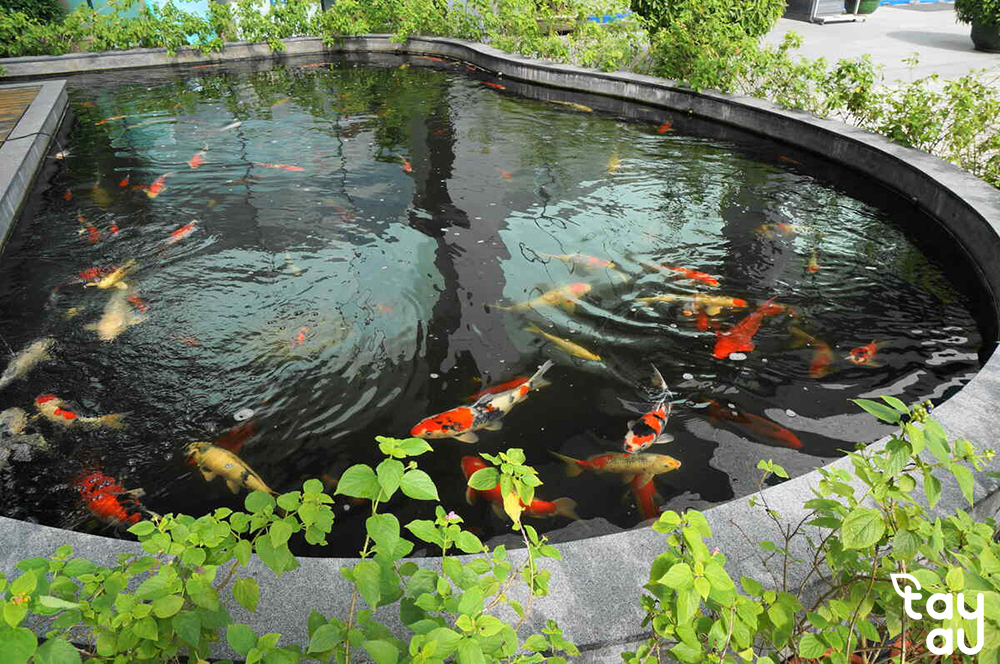
Surrounding Environment: The surrounding environment of the pond, including trees, falling leaves, and airborne dust, can also impact water quality. If the pond is located near trees or in a dusty area, you need a filtration system with better impurity removal capability.
Budget: Budget is also an important factor when choosing a filtration system. There are many options ranging from basic to advanced, with varying costs. If you have a limited budget, start with a basic filtration system and upgrade as needed. If you have a generous budget, you can invest in a complex filtration system from the start to ensure the best water quality.
How to Install a Koi Pond Filtration System
Properly installing an outdoor Koi pond filtration system not only ensures its efficient operation but also extends the system’s lifespan. Below are the basic steps to install a Koi pond filtration system.
Choose Installation Location: The Koi pond filtration system should be placed in an accessible location for convenient maintenance and cleaning. Make sure the filtration system is not obstructed by trees or other objects.
Connect the Components: Connect the parts of the filtration system according to the manufacturer’s instructions. Ensure the water pipes and joints are tightly sealed to prevent water leakage.
Test the System: After installation, check the entire system to ensure it is working properly. Verify that water flows continuously through the filters and there are no leaks.
Adjust the System: If necessary, adjust the filtration system to achieve optimal performance. This may include adjusting water flow, changing filter materials, or adding additional filtration devices like UV filters.
Maintaining the Koi Pond Filtration System
Regular maintenance is essential to keep the filtration system performing well and to ensure the best living environment for Koi fish.
Cleaning the Mechanical Filter: The mechanical filter needs to be cleaned regularly to remove trapped solid particles. This helps maintain water flow and prevents clogging.
Replacing Biological Filter Media: Biological filter media does not need to be replaced frequently but should be checked periodically to ensure beneficial bacteria are thriving. If the media is dirty or damaged, replace it with new material.
Cleaning the Chemical Filter: The chemical filter needs to be replaced when its ability to absorb harmful substances decreases. The replacement frequency depends on water quality and the manufacturer’s recommendations.
Checking the UV Light: The UV light should be checked and replaced regularly to ensure effective sterilization. The replacement time is typically every 6-12 months, depending on usage intensity.
Common Issues and How to Fix Them
Although Koi pond filtration systems are designed to operate efficiently, some issues may still arise. Below are common issues and how to fix them. If the mechanical filter is clogged, water will not flow through, reducing the filtration system’s efficiency. The solution is to clean or replace the filter membrane regularly. Beneficial bacteria in the biological filter may die due to sudden changes in temperature or water quality. To fix this, add new biological filter media and adjust water quality to create favorable conditions for bacteria to regrow. If the UV light is not working, the system’s sterilization capability will decrease. Check the power supply, cables, and bulbs in the outdoor Koi pond filtration system to identify the cause and replace if necessary.
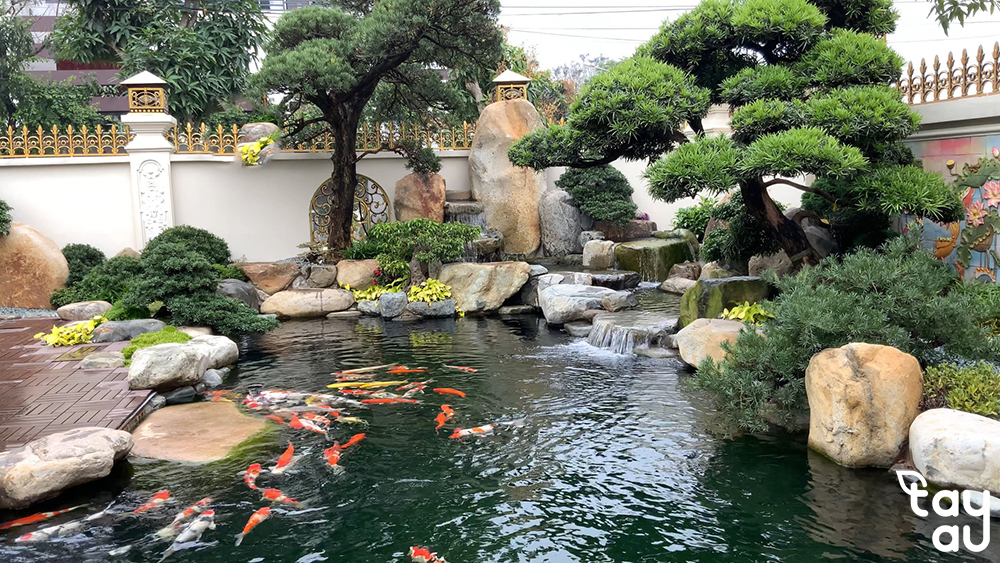
Koi Pond Filtration Systems play a crucial role in maintaining an ideal living environment for Koi fish, helping them grow healthily and preventing diseases. Understanding the structure, operating principles, and how to maintain the filtration system will help you maintain water quality in the pond, ensuring Koi fish always have the best living conditions. Choose the filtration system that suits your pond and perform regular maintenance to keep your Koi pond clean and safe.








