


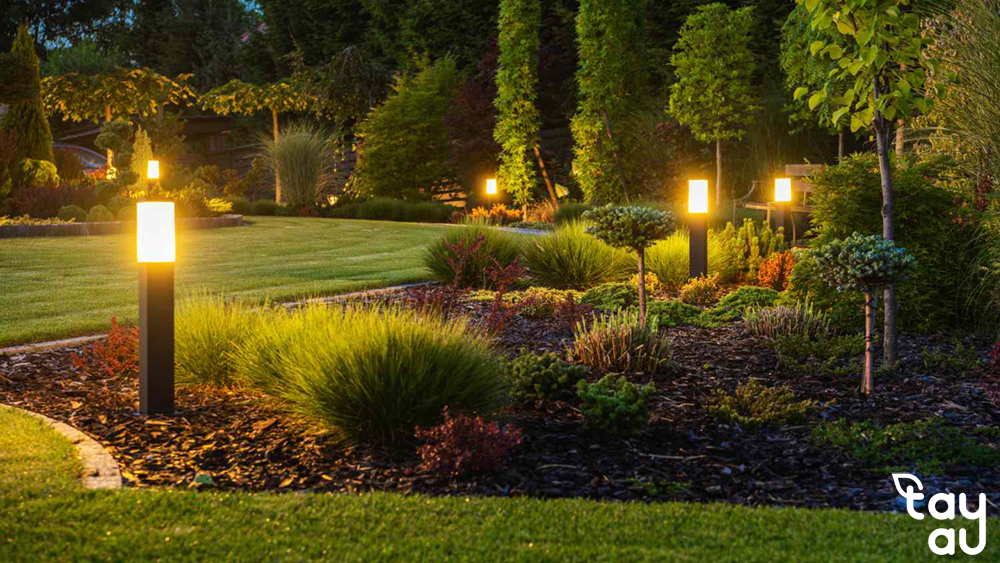
The garden is the transitional space from the outside to your home, playing a very important role in bringing family members closer to nature. In addition to planting decorative plants in the garden, you should also arrange lighting in the garden design with beautiful lamps. They will make your garden even more dazzling and enchanting when night falls.
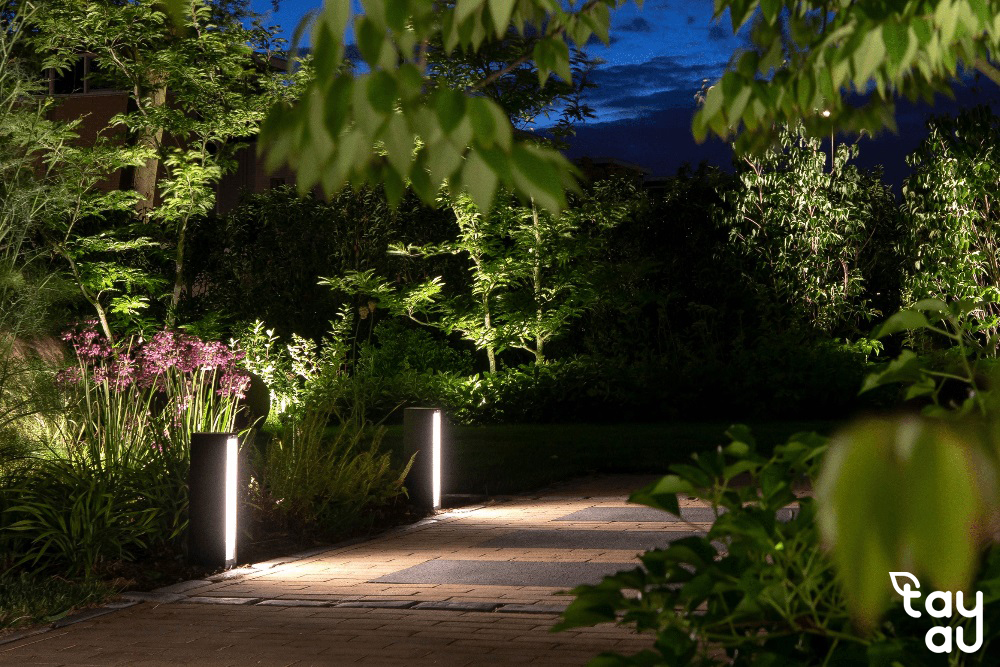
Why is Lighting Design Important for Gardens?
Lighting in the garden is an essential element in designing the exterior space of your home. The purpose of installing outdoor garden lighting is to provide illumination for daily activities, enhancing safety and increasing the aesthetic value of the entire garden as well as the house.
Modern architectural designs focus not only on interior spaces but also on exterior spaces. In decorating exterior spaces, gardens feature many elements such as pathways, small landscapes, ornamental plants, flowers, etc., and obviously, garden lighting as well. Whether it’s a small residential garden or large garden spaces like villas, resorts, hotels, etc., lighting systems are always crucial as they play a very important role.
For smaller gardens, designing lighting is quite simple with just a few light bulbs. However, to achieve a truly impressive and successful garden space, you need to consider factors such as the lamp’s design, installation location, quantity of lamps, and lamp wattage. Conversely, if you have a large garden space with extensive areas, you need a comprehensive design plan to ensure everything is interconnected, suitable, and harmonious.
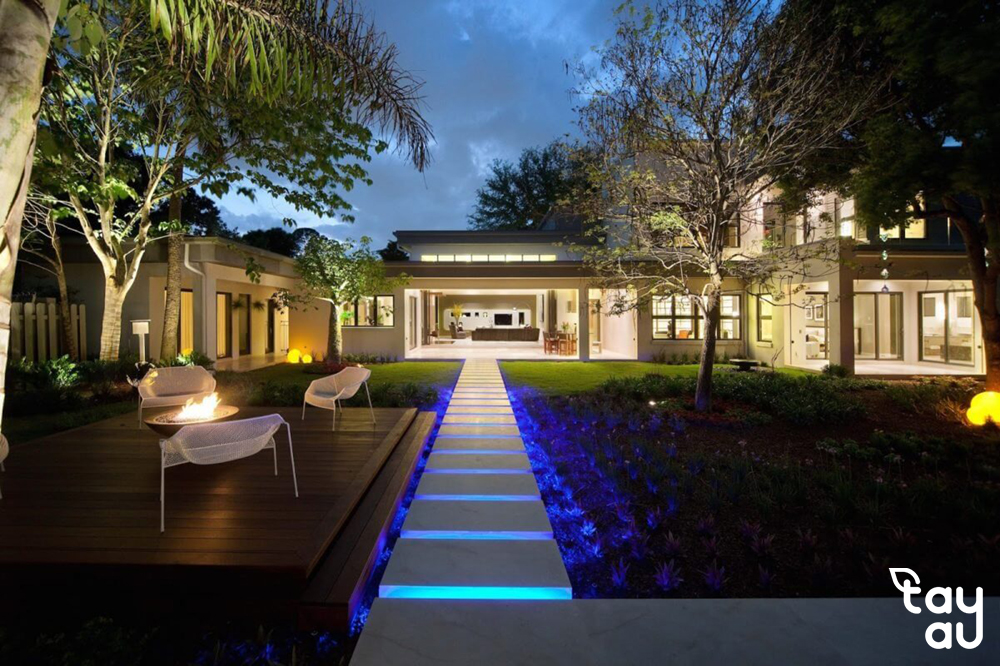
The Best Garden Lighting Designs of 2024
To assist customers in their selection process, Tây Âu Landscape will suggest some of the most popular garden lighting designs currently available.
Pillar Lights
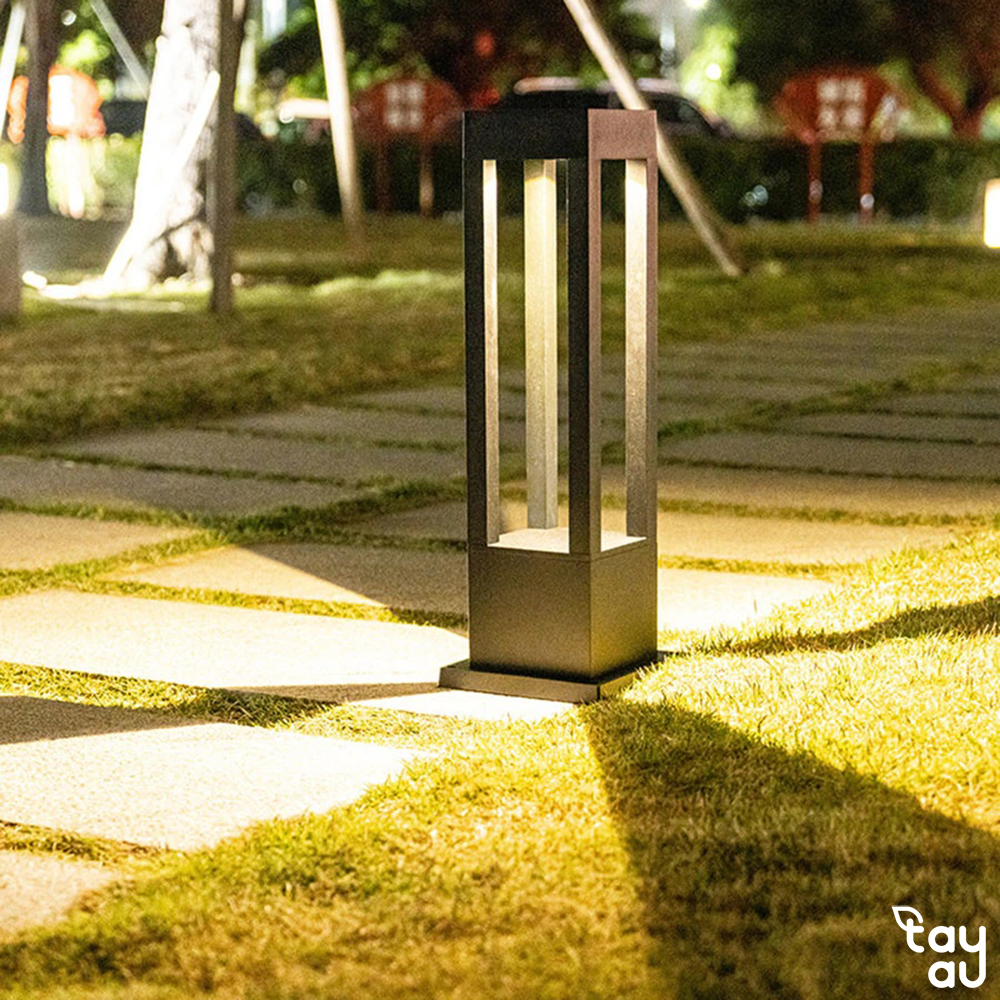
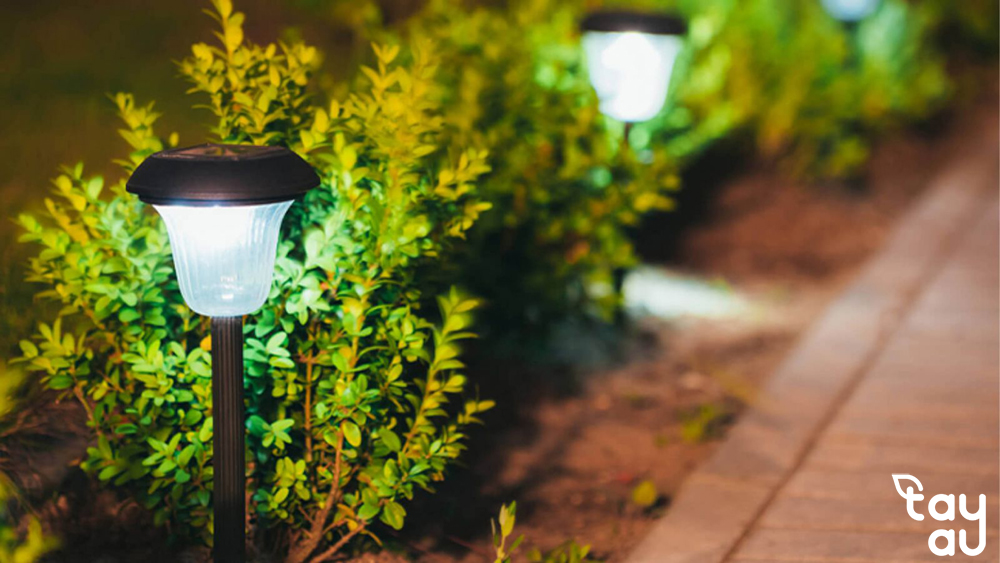
Pillar lights are outdoor lighting fixtures used for garden design, available in two types: tall (2-4m) and short (30-60cm) pillar lights. These lights are often used to decorate pathways or along the boundary walls of gardens or villas. They come in a variety of designs from classic to modern, giving you more options to choose from.
Outdoor Wall Lights
Outdoor wall lights, also known as wall-mounted lights, are elegant, minimalist, and not overly elaborate. They are made of rust-resistant metal and coated with electrostatic paint to prevent oxidation, making them safe for outdoor use. They come in two types: single and double head wall lights, with various designs such as square, spherical, etc., and options for one or multiple bulbs, providing beautiful and impressive effects. Depending on your needs, you can choose bulbs with wattages ranging from 5w to 20w.
LED Flood Lights
LED flood lights have high light intensity and can cover large areas with long-distance illumination. They have a high level of finish, operate stably for many continuous hours, and emit very little heat. Equipped with the latest generation LED chips, they have a lifespan of up to 50,000 hours.
With a substantial wattage range from 50w to 500w, they can meet all your lighting needs, from home gardens to villa or hotel gardens, etc.
Grass Spike Lights
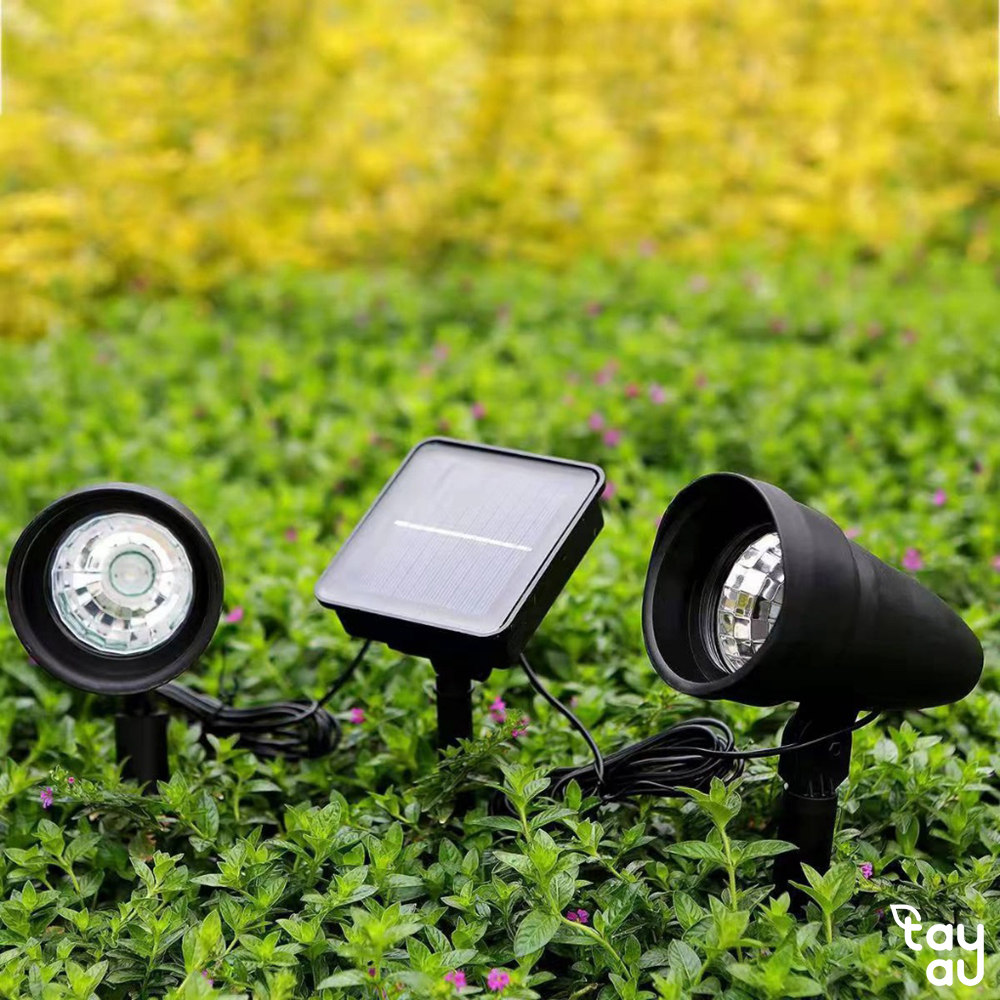
Grass spike lights are compact and highly portable, as the base (spike) is designed to be inserted directly into the ground, making it easy to move to different desired locations. These lights are made from high-quality materials and are equipped with LED chips, emitting very realistic and stable light. Grass spike lights come in various modes, including single-color or multi-color options. They are commonly installed along pathways, around tree trunks, flower beds, or small garden features.
LED Strip Lights
LED strip lights are widely used in garden lighting designs. They are easy to use and highly flexible, creating distinctive light strips. LED strip lights come in single-color options and have integrated color-changing modes with various colors. The standout feature of LED strip lights is their high flexibility, allowing them to be shaped and adjusted to fit different objects or the layout of the house. The LED chip is covered with a plastic layer, which protects it and creates a shimmering and enchanting light strip.
Garden Lighting Design Positions
House Gates and Pathways
These areas are frequently used, so adequate lighting is essential. Gates should be equipped with wall-mounted lights, which can be installed on either side of the gate posts or above the gate to shine downwards. Pathways in the garden typically use in-ground LED lights, grass spike lights, or garden post lights. When installing lights on pathways, choose lights with moderate brightness and ensure a proper distance between them to avoid glare or insufficient lighting that could compromise safety.
Walls and Fences
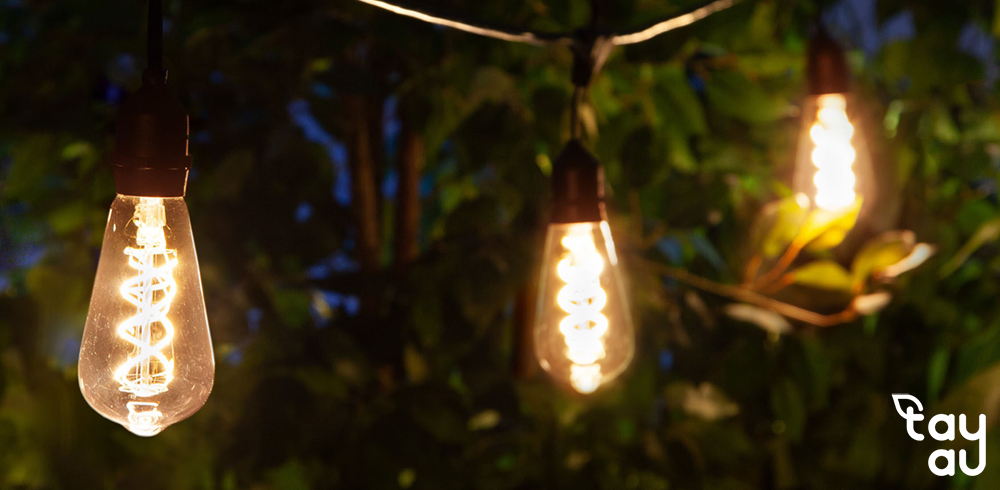
Walls and fences are often overlooked, but a few accessories like wall-mounted flower baskets or LED string lights can make these areas more vibrant and attractive.
Lawn, Tree Trunks, Flowers, and Garden Features
Installing lights on lawns, tree trunks, and small flower beds adds decorative value and enhances the aesthetics of the garden. Using lights in these areas improves visual appeal, brightens dark spots, and highlights shaded areas. For these positions, consider using grass spike lights, mushroom lights, or in-ground lights.
Porch and Yard Areas
Porches and yard areas are often used for outdoor family activities. In these areas, you can use wall-mounted or high post lights, which are appropriate choices. Additionally, combining various types of lights creatively can enhance the beauty of the space. Ensure that the light colors are harmonious with each other and with the house’s architecture.
Important Considerations for Garden Lighting Installation
Wiring and Garden Accessories
For LED strip lights, consider using plastic tubing for extra protection. Choose PVC tubing as it is flexible, impact-resistant, fireproof, and can be bent to route the LED wiring. Also, select electrical wiring that is waterproof and insect-resistant.
Use a dedicated transformer for the garden lighting system. Typically, the transformer should have a capacity 1.5 times greater than the total wattage of the lighting system to avoid overload.
Installation Principles
- When designing garden lighting, pay attention to the locations of electrical and water lines to avoid interference or inconvenience during installation.
- Create a diagram outlining the locations for lights, outlets, and wiring before construction to facilitate a smooth installation and ease of maintenance.
- Divide the lighting system into two areas: one for pathways, gates, and porch areas requiring sufficient illumination, and the other for tree trunks and garden features where appropriate wattage is needed to achieve harmonious lighting.
- Install a separate circuit breaker for the lighting system to enable easy shutdown for repairs or troubleshooting. Ensure the circuit breaker is housed in a waterproof box.
- Place the transformer in a separate area, approximately 1 meter above the ground.
With the information provided by Tây Âu Landscape, we hope you now have a clearer understanding of how to install and the significance of garden lighting, as well as the important considerations for arranging lights in garden designs. If you have any further questions or concerns, please contact Tây Âu Landscape for advice!








