


Growing climbing plants on the rooftop for decoration and cooling the surrounding space has become a “hot” trend and remains highly popular today, from apartments and townhouses to luxurious villas. If you are also interested in this topic, follow the article below to learn about planting and caring for climbing plants, designing trellises, and some of the most commonly grown climbing plants.

Characteristics of Rooftop Climbing Plants in Trellises
Climbing plants grown in pots are primarily those with small, soft stems and almost no branches. Therefore, these plants do not require a large living space and can be grown right in the garden or in pots.
Grapevines have long been recognized for their strong vitality. They can thrive well in both sunny and shaded areas. Therefore, you can grow climbing plants indoors, outdoors, on the balcony, or on the rooftop.
Additionally, climbing plants require minimal care. You only need to schedule regular watering and pruning. This type of plant is very suitable for those who are often busy but still want to maintain a green space at home.
Aesthetically, growing climbing plants in pots helps create a cool green space for the home, making the living environment vibrant. Moreover, climbing plants have the ability to purify the air and reduce noise.
Furthermore, some climbing plants have feng shui significance, bringing vitality and prosperity to the home. Therefore, homeowners often plant climbing plants that match their astrological signs to bring positive energy.
How to Choose the Right Climbing Plants for Trellises
Thus, growing climbing plants at home not only provides a green, colorful living space and connects with nature but also helps purify the air and invigorate the home. The choice of climbing plants for trellises depends on the following criteria:
Suitability for the Living Space
Unlike woody plants that require a lot of space to grow, climbing plants can thrive in smaller spaces. Grapevines come in various sizes as well. The first criterion when choosing climbing plants for trellises is their suitability to the architectural and design space of the house. If the space is small, you can plant small, charming climbing pots. If you have more space, you can create a trellis or archway with climbing plants.
Suitable Planting Location
Grapevines are primarily planted to create a green, fresh living space. Therefore, climbing plants can be planted on the outer walls to create a green carpet that protects the house. Some climbing plants, such as golden pothos, ivy, and peace lilies, thrive well in shaded areas and are suitable for balconies, staircases, or small landscapes. In contrast, flowering climbing plants like bougainvillea and climbing roses are often planted in sunny locations to promote growth and development.
How to Plant and Care for Climbing Plants in Pots
Planting climbing plants from seedlings differs from planting them from seeds. Here are some important tips for growing climbing plants:
Choosing Seeds or Seedlings
You should choose climbing plants that are suitable for the intended planting space. Flowering climbing plants are suitable for sunny areas, while shaded areas like balconies or indoor small landscapes are better for shade-loving plants. Additionally, when selecting seedlings, choose healthy plants without signs of pests or diseases. If planting from seeds, buy seeds from reputable sources to ensure they are viable and can germinate.
Choosing Soil and Pots
If sowing seeds, you need to maintain moisture and monitor the seed condition daily. If planting from seedlings, avoid breaking the roots when transferring them to the pot, fill the pot with soil, and water immediately afterward. The soil for climbing plants should be nutrient-rich and kept loose. Choose soil with clay components, which is suitable for grapevine growth.
Regarding pots, the size should match the planting space. Ceramic, porcelain, and terracotta are the most suitable materials for pots. Although climbing plants do not require frequent care, you still need to understand how to care for them in pots. To achieve well-maintained climbing plants, pay attention to pruning, watering, and fertilizing.
Pruning, Watering, and Fertilizing
Grapevines need to be pruned and shaped to form the desired trellis. You need to create a frame or trellis for the plant as soon as the stem starts to grow. Excess parts should be removed so that the plant can focus its nutrients on the main branches.
Depending on the plant species, you can schedule regular watering. The pot for climbing plants should have drainage holes to prevent waterlogging. You can water twice a day, in the morning and late afternoon, with just enough water to keep the soil moist.
Fertilizers provide nutrients for plant growth and should be applied in amounts suitable for the plant’s growth cycle.
How to Design a Trellis for Climbing Plants on the Rooftop
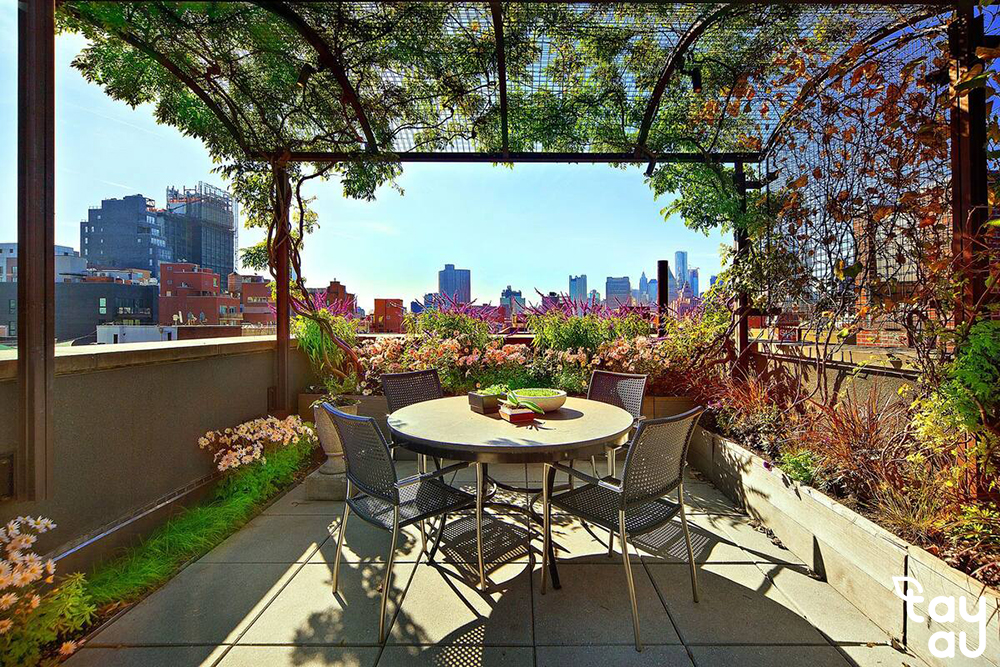
A complete trellis should be firmly fixed, and joints must be tightly designed to avoid warping. You can use any suitable material to create the trellis for climbing plants. Generally, prioritize materials that are durable, easy to install, and easy to disassemble, ensuring safety during use.
Currently, trellises made from hollow metal pipes and painted with rust-resistant paint are very popular. Additionally, mesh trellises are also a great idea if you want to grow plants like chayote, squash, loofah, or climbing grapes.
Moreover, if you want to design and install a smart trellis on the rooftop yourself, you can create an A-frame trellis, vertical trellis, or inclined trellis against the wall.
To build your own trellis, you need to prepare the following materials and tools:
- Materials for the frame: bamboo poles, metal frames, plastic-coated steel pipes…
- Mesh wire.
- Frame connection tools (zip ties, connectors, clamps for joining or holding pipes, swivel joints…).
After preparing all the materials and tools, you can start installing the trellis in the garden, on the rooftop, or on the balcony (if the balcony is spacious enough).
A-Frame Trellis
Step 1: Secure the metal rods or bamboo poles to form an A shape and connect the ends of the A to create a stable frame that can stand firmly on the ground.
Step 2: Cover the A-frame with mesh. The mesh should be stretched and secured to the frame using zip ties.
Vertical Trellis
Step 1: Drive bamboo stakes or metal rods parallel to each other to form a grid, with each side about 40 – 50 cm long. Then, use connecting materials to secure the newly constructed frame.
Step 2: Use mesh to cover the top of the frame to create a surface for the vines to cling to. Secure the mesh to the frame’s edges with zip ties.
Wall-Mounted Trellis
The method is quite simple: just assemble a grid frame using bamboo poles or metal rods, then secure the frame with connecting materials. Next, lean the frame against the wall and fix the base.
Additionally, you can refer to some simple and easy-to-make trellis design ideas below:
- Fence-style trellis combined with mesh or woven wire.
- Trellis made from a unique wheel rim.
- An arched gate trellis to add a decorative touch.
- House-shaped trellis made from wooden or metal pipes.
Beautiful and Sun-Tolerant Rooftop Vines
Here are some beautiful and sun-tolerant rooftop vines you might consider:
Passionflower
This vine is very easy to grow and has a relatively simple propagation method. It is known for its small flowers that bloom year-round, with clusters of pink or light purple blooms. The colors of this flower create a more romantic and attractive space. Its fragrance is subtle and relaxing, providing a soothing effect.

Japanese Morning Glory
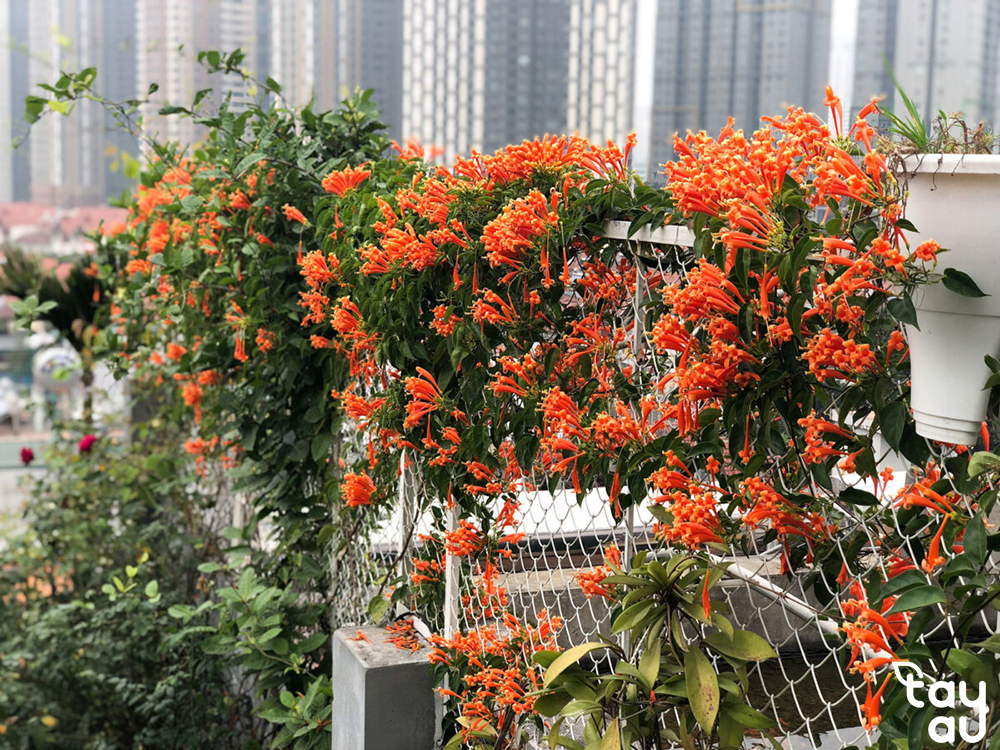
Just by the name, you can tell about the wonderful and positive benefits of this plant. The Japanese Morning Glory, also known as a climbing vine, is highly favored and features small clusters of bright red flowers. Planting this flower in a rooftop garden will provide shade and create a beautiful space. The charming and beautiful appearance of the Morning Glory makes it an excellent choice for rooftop vines.
Pink Jasmine
Depending on personal preferences or easier-to-remember names, Pink Jasmine can also be called Garlic Vine. This vine features stunning white and purple flowers that create a picturesque setting. The rooftop garden will enhance its aesthetic appeal with pink blooms. Pink Jasmine grows relatively quickly and is easily propagated by cuttings in a sunny location. It requires average water levels, making it perfect for rooftop planting.
Bougainvillea
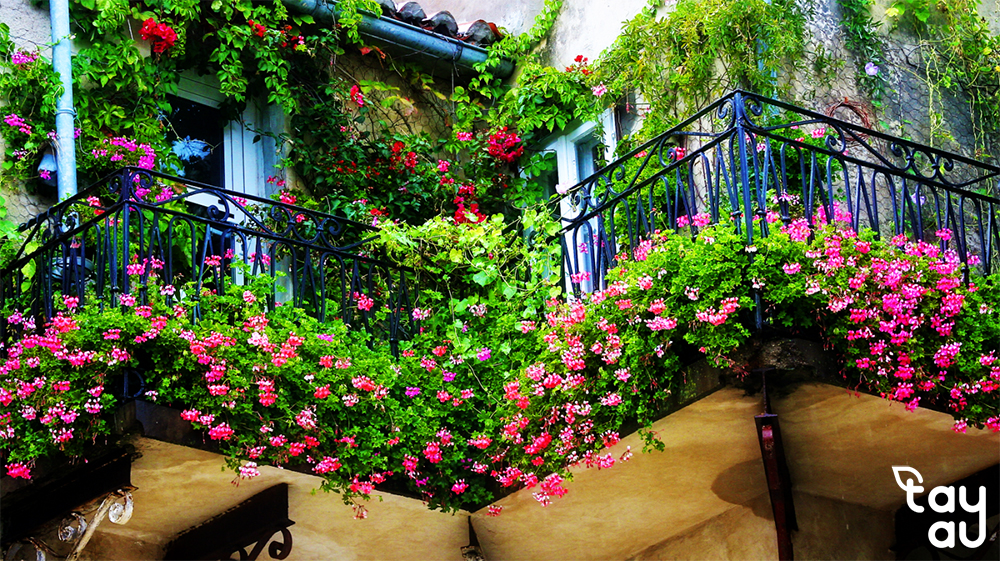
The image of a Bougainvillea bush is certainly familiar to garden enthusiasts. When choosing vines for a balcony, you might consider this plant. Allow it to climb walls or arbors to create shade. Bougainvilleas come in a variety of colors, including pink, orange, red, white, and purple, making them very interesting. Bougainvillea blooms year-round and is relatively easy to care for. It thrives in bright light and can survive in hot climates. Enjoy a beautiful rooftop with Bougainvillea vines, as they will make the garden space feel fresh and splendid.
Passionfruit
If you want to grow plants for shade, decoration, or fruit, Passionfruit is definitely a great choice.
Passionfruit, also known as passionfruit vine, is a very easy-to-grow vine that develops vigorously. You won’t need to spend too much time on fertilizing to get a lush and fruit-bearing vine.
Passionfruit is high in vitamins, has a fragrant and unique flavor, and can be used in drinks, smoothies, teas, or baked goods.
Passionfruit is a sun-loving, drought-resistant plant, making it ideal for rooftop gardens with limited space.
English Roses (Single and Double)
English Roses feature a soft pink color and glossy green leaves. They typically maintain their green leaves year-round, with minimal leaf drop, and have a moderate climbing rate. Both single and double varieties of English Roses are perfect for climbing columns and small corner walls. Each flower type has its unique beauty but is equally captivating.
Black-eyed Susan
Black-eyed Susan flowers are an excellent choice for a rooftop vine trellis. The name Black-eyed Susan refers to the charming black center of the flower. This plant usually comes in colors like yellow, orange, white, and sometimes red or multi-colored. It grows slowly, so it’s suitable for hanging baskets or climbing walls on balconies or small walls. This plant blooms sporadically throughout the year, with the most blooms in cooler seasons.
Chili Pepper Flowers
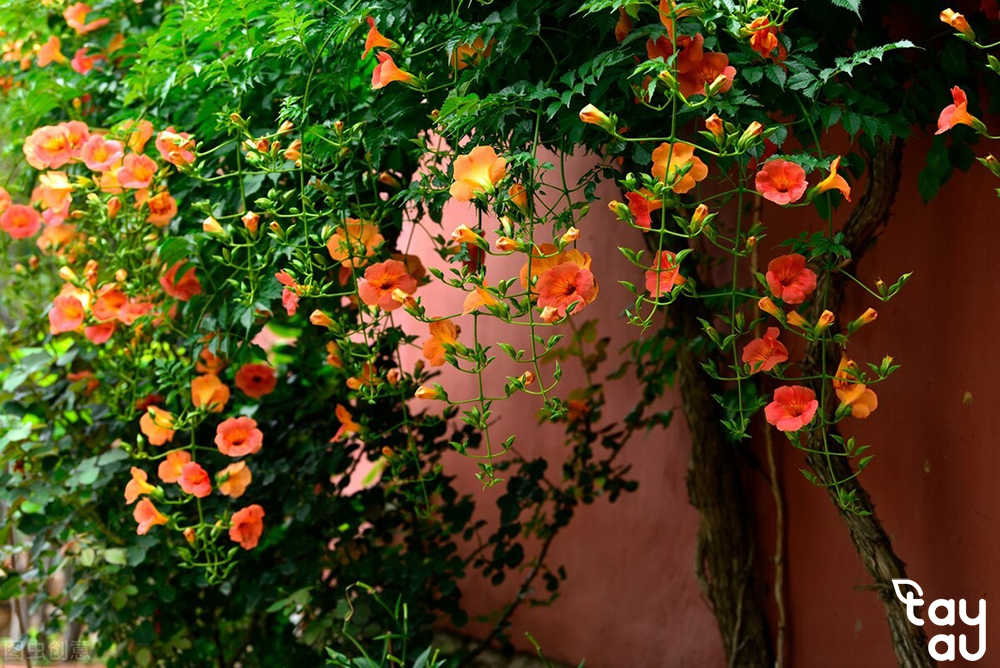
Chili Pepper flowers are extremely fragrant with soft, drooping stems. They can tolerate sunny and humid environments. Chili Pepper flowers look beautiful in early spring and throughout summer and fall. They are fast-growing vines with high coverage, suitable for hot, sunny locations, trellises, or garden walls…
We hope this article has provided you with useful information about rooftop vines. Choose the right plants to enhance the aesthetics of your rooftop. For more details, please contact Tây Âu Landscape for specific advice today.








