


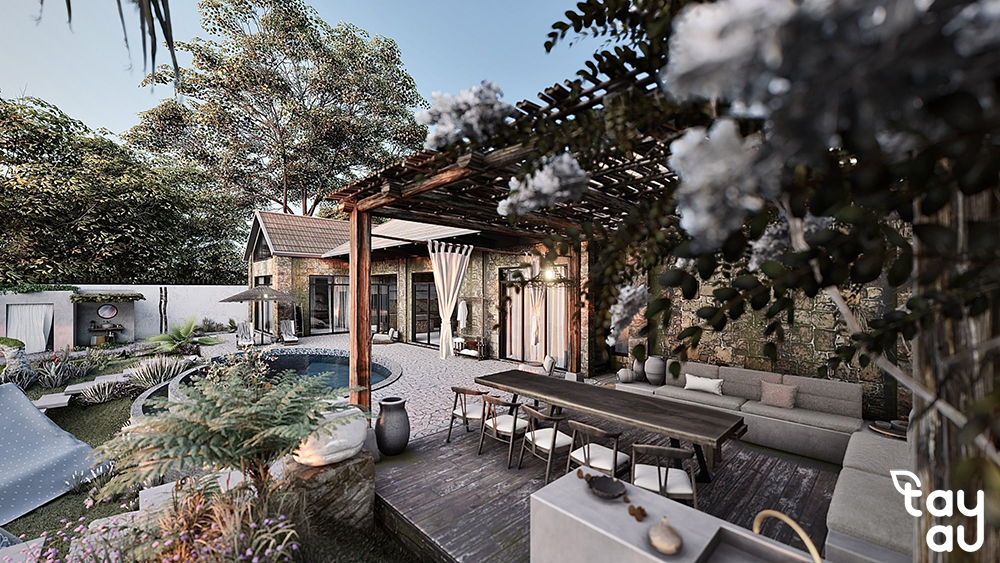
As modern life becomes increasingly crowded and confined within four walls, choosing a small garden or surrounding areas with environmentally friendly wooden flooring is gradually becoming the perfect choice for many people. Garden wooden floors are waterproof, termite-resistant, heat-resistant, and durable, creating a living and relaxing space and building the perfect dream home.
One of the most popular construction choices today is using wooden floors for walkways and garden areas. The high-quality material with aesthetic value enhances the luxury of outdoor projects. So, what exactly are garden wooden floors, and why should we use this material? Let’s explore with Tây Âu Landscape right here.

Garden Wooden Floors are Growing in Popularity
Outdoor garden wooden floors are a type of flooring material specifically designed for outdoor areas such as gardens and walkways. Made from wood and plastic for exterior decoration, this material has clear advantages such as water resistance, termite resistance, weather resistance, installation techniques, precision, and aesthetic value. Wooden planks with finely detailed, sharp grain patterns and a blend of modern and classic colors combine with contemporary landscapes and greenery to create a space perfect in every detail.
Advantages of Garden Wooden Floors
Aesthetic Value
In current residential and resort projects, this high-end, luxurious material cannot be overlooked. While traditional materials like gravel and ceramic tiles still exist, faux wood floors continue to represent the class of the project and are irreplaceable in special cases.
Durability, Structure, and Impact Resistance
With a solid wood core and a mixture of plastic or stone, garden wooden planks ensure extreme hardness and compression compared to traditional floors. They withstand external impacts without scratching, cracking, warping, or bending.
High Lifespan and Long-Lasting Durability
The planks can withstand high outdoor temperatures and weather changes, retaining their original shape and color. To enhance the material’s durability, in addition to being made of wood, the planks are also made from plastic or stone powder, making them repairable and suitable for outdoor use. When installed around pools, walkways, or areas with frequent watering, the wooden floor does not absorb water or swell over time, preventing warping and mold. This ensures the longevity of outdoor projects.
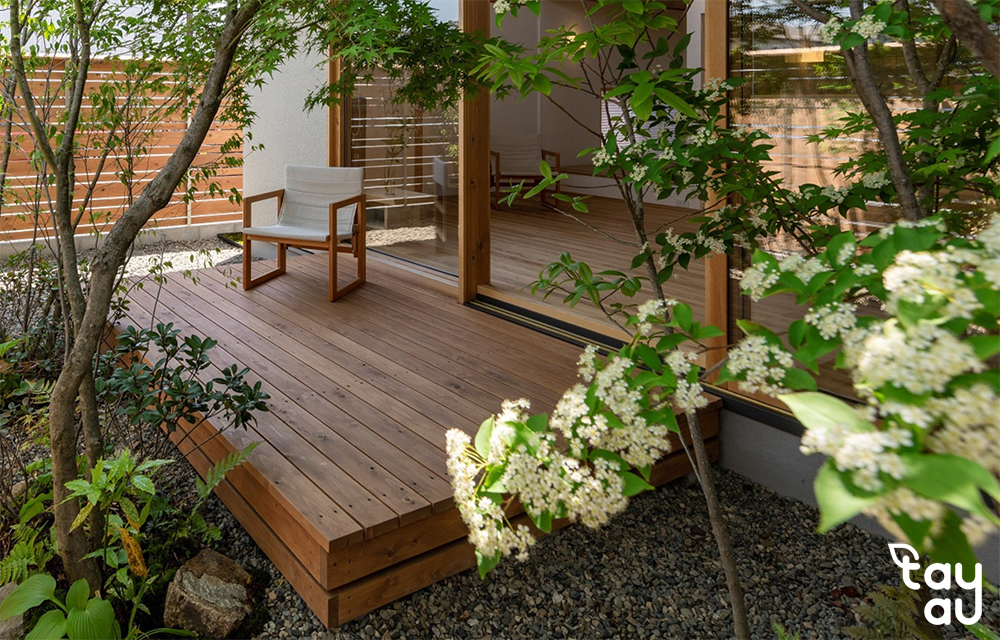
Slip Resistance Protection
To prevent slipping when watering plants, in rainy weather, or around pools, the wooden surface is designed with a double texture and appropriate roughness to help homeowners avoid serious slip accidents and ensure safety in wet and humid environments. Especially if you have small children, a playground or pool covered with garden wooden flooring is an ideal choice for parents.
Flexibility in Installation, Reusability, and Cost Efficiency
Garden wooden floors are highly flexible, reusable, and can be disassembled for installation in different areas, an advantage not offered by many other materials. When choosing between various materials, wooden floors are always a highly optimal and perfect choice for outdoor projects with a reasonable cost.
How to Use Garden Wooden Floors
Garden wooden floors are widely used in various types of construction:
Walkways, corridors, stairs, and outdoor wooden railings: Commonly used areas in projects are walkways, stairs, and balconies. The aesthetic value of the project is enhanced, and safety is highly rated by experts.
Areas with lots of water such as pools, artificial beaches: For these types of projects, architects limit the use of ceramic tiles due to their high slip risk, which can have serious consequences. Therefore, installing garden wooden floors is extremely useful, safe, and convenient.
Decorating exterior areas such as wall cladding, shelves, furniture, plant pots, and fish tanks: Considered a versatile and highly functional material in current construction trends, designers use it on decorative details like plant pots, fish tanks, and wall cladding to make living spaces fresh and luxurious. These are also impressive highlights for living and working spaces.
Wooden bridges over fish ponds or garden areas: An ultimate relaxation and leisure space with a wooden bridge over a fish pond or small garden at home? It’s exciting because this material is now the choice of most users. It is impressive and interesting to simply admire and walk on without worrying about slipping. That’s why many residential projects, resorts, and high-end hotels often use wooden floors for decoration.
In addition to outdoor areas, wooden floors are also popular for indoor areas such as offices, bathrooms, saunas, piers, and many other purposes.
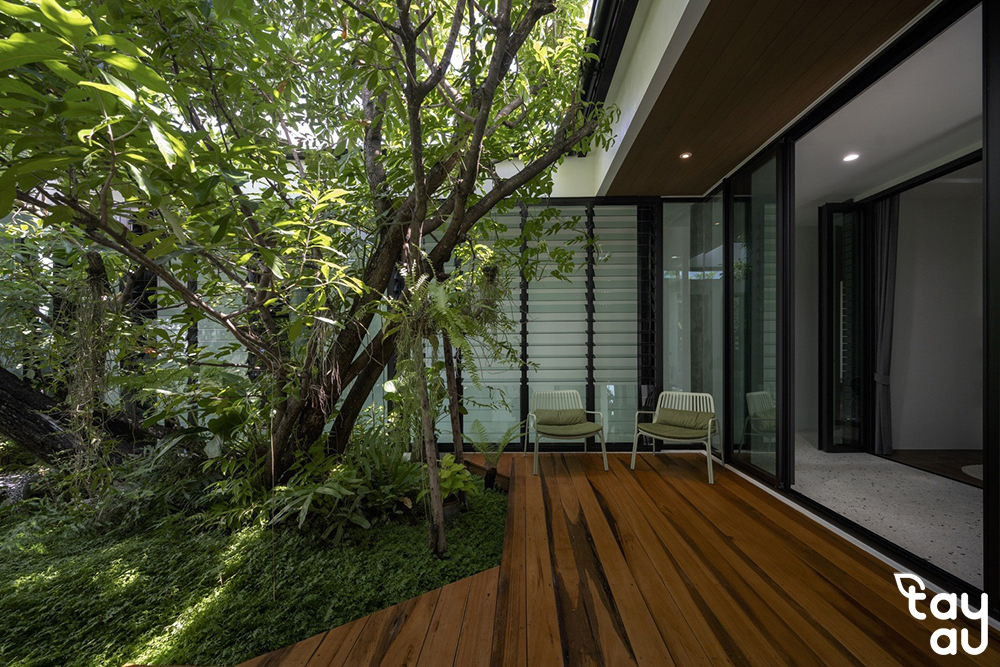
Maintaining Outdoor Wooden Floors, Usage Tips
All items in the garden area need to be properly maintained. Garden wooden floors are no exception. To increase durability, please note:
Regular Cleaning: Wooden floors installed outdoors usually have grooves for water drainage and increased safety. Therefore, you should regularly clean and keep the grooves clean. You can use floor cleaner or diluted soap for cleaning. However, avoid using alcohol or cleaning agents not recommended by the manufacturer, as strong cleaning agents may damage or discolor the floor surface.
Apply pine oil every 6 months and apply a maintenance coat: After cleaning, you should regularly apply pine oil to effectively increase the shine of the wooden floor. Pine oil is excellent for wooden surfaces. Typically, applying pine oil every 6 months will keep the floor bright and protect it from UV rays from the sun. To be more careful, you should enhance the shine of the floor by applying a maintenance coat with specialized primer paint. Then apply a coat of colored paint.
Guidelines for Installing Outdoor Wooden and Plastic Floors
Step 1: Survey, Plan, Prepare Tools, and Site Preparation
After surveying the project and ensuring that the garden area meets construction standards, the designer will estimate the quantity of materials and tools needed: beams, drills, braces, screws, etc. Ensure height differences are accounted for.
Step 2: Construction and Installation
Secure the plastic wood beams or stainless steel/zinc-coated box sections to the ground or concrete columns using stainless steel expansion screws to prevent rusting, which can affect the quality of the project.
After completing the installation of the framework, attach the plastic wood planks to the framework using plastic brackets and stainless steel screws. The plastic adhesive not only secures the floor planks to the framework but also helps connect the planks together. Attach V-shaped corner brackets around the pool deck using adhesive or nails to cover the ends of the wooden planks and create a perfect wooden pool deck surface.
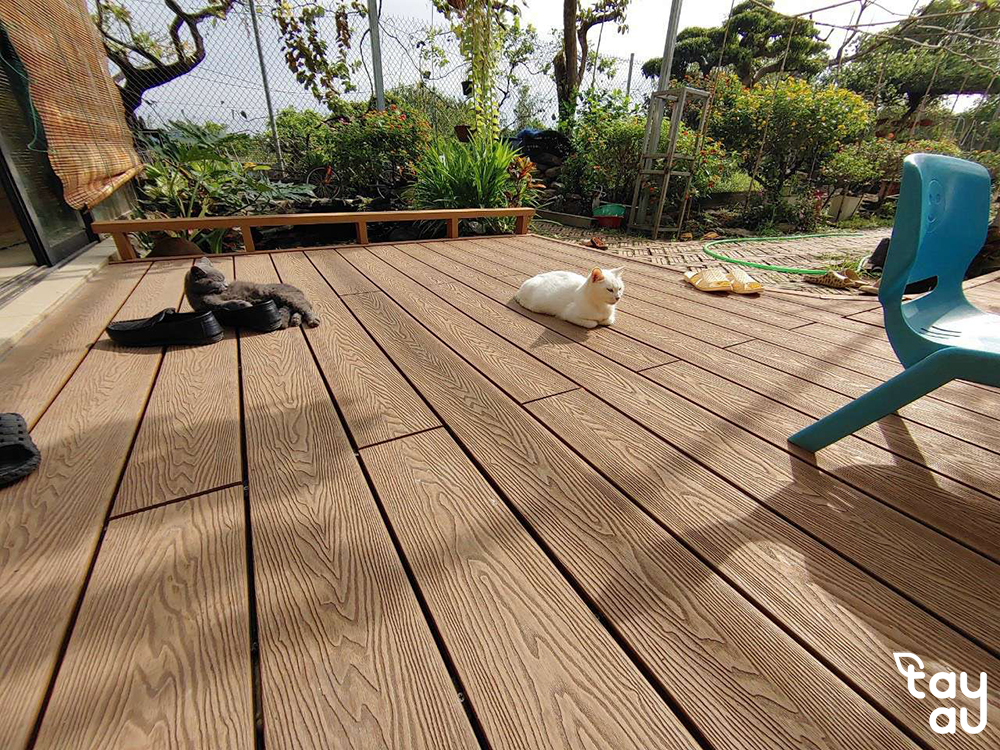
Step 3: Finishing and Project Inspection
After installation, a technician will inspect and approve the floor. Technically, the floor should be sound, meaning that the planks are not loose, the surface is level, and the plastic wood planks are not cracked or chipped at the ends, with all ends properly supported by the beams.
To clean the garden floor after installation, use an industrial vacuum cleaner to remove dust from the plastic wood cutting on the floor surface and fallen debris. Then, use a powerful hose to wash away dust, sand, and dirt. Your pool deck is now ready for use.

In countries with hot and humid tropical climates like Vietnam, outdoor plastic wood flooring is highly favored. It does not warp, get infested with termites, or expand due to weather. As a result, wooden floors are widely used in garden areas, courtyards, balconies, ceilings, and as decorative accents. After installation, don’t forget to decorate with lights, small plants, and sharp accents according to the homeowner’s preferences. Your sophisticated and impressive outdoor garden will certainly be an ideal relaxation space—a luxurious “miniature” resort worth dreaming of.








