


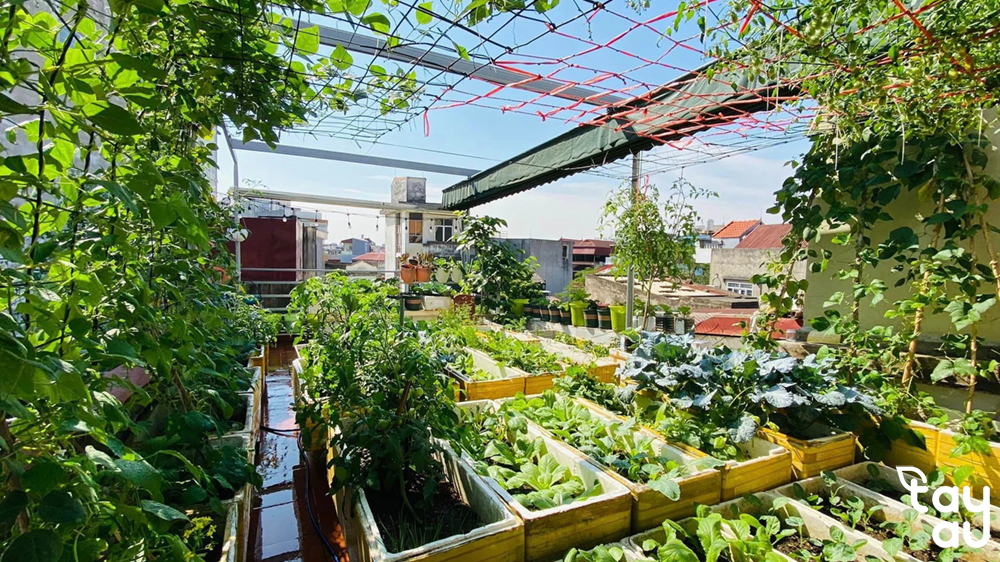
Today, in the context of increasing urbanization, the space available for green areas is increasingly shrinking and disappearing. As a result, the trend of growing clean vegetables at home, especially in small spaces like rooftops, is becoming a popular choice for many families. A clean vegetable garden on the rooftop not only provides a source of clean, safe, and high-quality food but also helps create a green, airy, and nature-friendly living space.

Why Should You Grow a Clean Vegetable Garden on the Rooftop?
Growing clean vegetables on the rooftop offers many practical benefits for daily life:
Home-grown clean vegetables do not use chemicals, ensuring the health of the entire family. You can be completely confident in the quality of family meals when using home-grown clean vegetables. Growing vegetables on the rooftop helps you save on daily vegetable costs while also making use of your free time.
A rooftop vegetable garden not only provides refreshing green color but also helps regulate the air, reducing the temperature inside the house on hot days. Taking care of the vegetable garden is a great way to relax, reducing stress and fatigue after stressful work hours.
Owning a clean vegetable garden on the rooftop also brings many significant benefits such as:
- Improving Health: Access to clean and safe food helps you maintain good health and reduces the risk of diseases related to unsafe food.
- Family Bonding: Taking care of the vegetable garden is an activity that family members can participate in together, creating bonding and joy in daily life.
- Reducing Negative Environmental Impact: Growing plants on the rooftop helps reduce the impact of environmental pollution and improves the air quality around the house.
- Increasing Property Value: A house with a clean vegetable garden on the rooftop not only creates a unique highlight but also increases the property’s value.

How to Design a Clean Vegetable Garden on the Rooftop
To have an effective and visually appealing clean vegetable garden on the rooftop, you need to pay attention to the following important factors:
Choose Location and Design
The rooftop location should receive direct sunlight, which is ideal for the growth of green vegetables. However, you need to ensure that your rooftop gets at least 6 hours of sunlight each day and is not obstructed by surrounding buildings or trees.
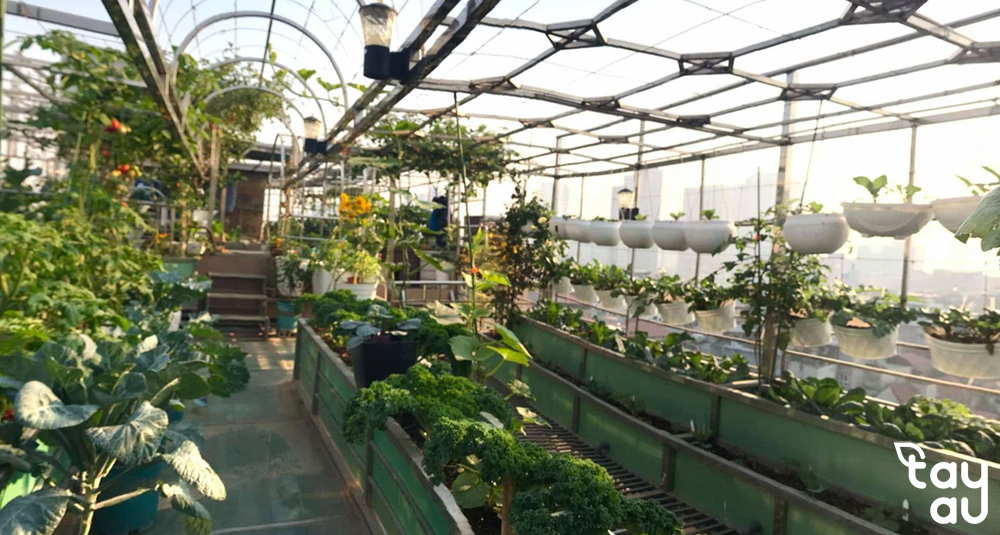
When designing a clean vegetable garden on the rooftop, you should allocate planting areas appropriately. Use planting trays or foam boxes for growing vegetables, or you can design shelves and hanging racks to optimize space.
Choose the Right Vegetables
Not all vegetables are suitable for rooftop planting. You should choose vegetables that are easy to grow and tolerate sunlight well, such as lettuce, kale, spinach, tomatoes, peppers, and herbs like basil and cilantro. These vegetables are not only easy to care for but also provide a bountiful supply of food for the family.
For beginners, start with easy-to-grow vegetables like lettuce, kohlrabi, or water spinach to gain experience in plant care and fertilization. Once you are comfortable with plant care, you can move on to more challenging plants like tomatoes, cucumbers, squash, and pumpkins. With more experience, you might even try growing fruit-bearing plants like melons, grapes, guavas, and apples.
Prepare the Soil and Irrigation System
Soil is a crucial factor in the development of a rooftop vegetable garden. Use clean, nutrient-rich soil that has been processed to avoid pests. The soil should be mixed with organic or microbial fertilizers to provide sufficient nutrients for the plants.
The rooftop often experiences higher temperatures, so regular watering is very important. You can use an automatic drip irrigation system or water by hand depending on the specific conditions. Ensure that the rooftop has a good drainage system to prevent waterlogging, which can damage the plants.
Seed Sowing
Depending on the type of seeds and the size of your rooftop vegetable garden, you may either sow seeds directly or need to pre-germinate them. Read the detailed instructions on the seed packaging to know how to germinate and sow them correctly. For plants that do not require germination, make a straight line in the prepared soil and sow the seeds with the appropriate density for each type of vegetable. This is crucial for the growth and development of the plants. If you plant too densely, the plants will be stunted and lack space to grow. 
Protect the Vegetable Garden from Environmental Impacts
Daily tasks for maintaining a clean vegetable garden on the rooftop include watering, fertilizing, weeding, pest control, and monitoring for diseases. You can use rice water, tea leaves, or coffee grounds for watering and fertilizing the plants. Additionally, some vegetables may need pruning and supports for proper growth. Roofs often face environmental impacts like strong winds and heavy rain. Consider installing shade or wind barriers to protect the plants. Also, mulching with straw or dry grass helps retain soil moisture and reduce erosion.
Harvesting Vegetables
Finally, it’s time to harvest the vegetables from your rooftop garden. For first-time gardeners, pay attention to some details during harvest. For regenerable vegetables, use scissors or a knife to cut carefully, and combine this with weeding and fertilizing to ensure quick subsequent harvests. Leafy vegetables can be harvested after about a month of planting. Root vegetables and fruit-bearing plants generally take longer to harvest. The timing varies depending on the type of plant.
Notes for Growing a Clean Vegetable Garden on the Rooftop
Growing Materials
If you do not research the necessary materials before starting your vegetable garden, you may get distracted and buy too many unnecessary items, leading to waste. Depending on the type of plants you want to grow, arrange pots, foam boxes, or supports accordingly.
Before you begin planting, make sure you have at least the following items:
- Plant pots
- Plant supports (if growing climbing plants)
- Seeds
- Vegetable soil
- Gloves
- Hoe, shovel
- Watering tools
Plants
You should have some knowledge about the plants, their characteristics, and growth. Understand which plants are easy to grow, which require less care, which are sun-loving, which need pruning, and how to shape the plants…
Once you understand the type of plants you want to grow, you will know how to care for them properly. You can refer to books, the internet, or join online plant groups to seek advice.
Fertilizers
Learning about fertilizers is also something you should do before starting to plant.
Different plants require different nutrients. Depending on the growth stage, the plants need specific types of fertilizers and elements.

Pests and Diseases
Pests and diseases are major causes of damage to vegetable gardens. You should regularly check your garden and apply effective pest control measures. Each type of plant has its own diseases and symptoms. You can refer to the experiences of others or gather your own experience as you start planting.
Growing a clean vegetable garden on the rooftop is an ideal solution for those who want a green living space and a safe food source for their family. Not only does it provide health and financial benefits, but rooftop gardening is also a wonderful way to connect with nature and create a green home in the city. Start designing and planting your rooftop vegetable garden to enjoy the wonderful benefits it offers!








